

Excessive Sweating
Effective treatment options for hyperhidrosis including prescription topicals, Qbrexza, and Botox.
About Hyperhidrosis
Hyperhidrosis is a medical condition characterized by excessive sweating. Normally, sweating helps control the body's temperature, but when sweating occurs too often and in an amount over what is needed, this may result in hyperhidrosis.
Many patients who have hyperhidrosis sweat from one or two areas of the body. Most often, they sweat from their underarms, palms, or soles. Hyperhidrosis can be uncomfortable, embarrassing, and interfere with everyday activities.
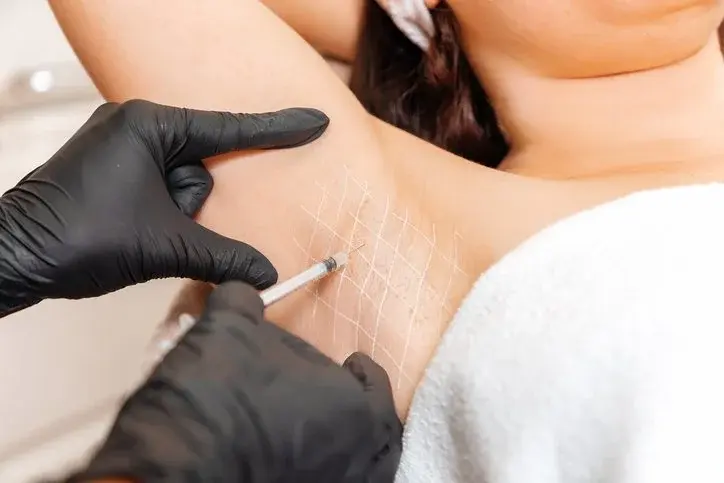
Treatment options include prescription strength antiperspirants as first-line therapy, Qbrexza (a topical medication for underarm sweat in patients 9 and older), Botox and other botulinum toxin injections that temporarily block signals to sweat glands, and oral agents. Dr. White will assess for an underlying cause and discuss the treatments available to you.
FAQ
Common Questions
What are the causes of hyperhidrosis?
Our body's nervous system tells the body when to sweat. Hyperhidrosis is caused by dysregulation of the nervous system, or by abnormal glands that produce sweat. Leading causes include hereditary factors, underlying medical conditions such as diabetes and gout, side effects of medications, and anxiety disorders. For many people, hyperhidrosis begins during puberty.
How does Botox treat excessive sweating?
Botox and other botulinum toxin products work by temporarily blocking the chemical signals from the nerves that tell sweat glands to produce sweat. When the glands don't receive these signals, sweat isn't produced, and your skin stays dry in the targeted areas. Prior to injections, the skin is numbed. Typically, one session is needed, and sweating gradually returns between 6 and 9 months.
What is Qbrexza?
Qbrexza is a topical anticholinergic medication incorporated into a cloth that is wiped under each arm once daily. It works on the sweat glands directly to decrease sweating. Qbrexza should be avoided in certain medical conditions like glaucoma, myasthenia gravis, and Sjogren's syndrome, and is not recommended during pregnancy or lactation.

Control Excessive Sweating
Schedule a consultation to discuss treatment options.
Explore
Other Medical Dermatology Services

Acne
Treatment is aimed at decreasing inflammation and bacteria.

Melasma
Treatment involves prevention through sun protection.

Cysts
Can be treated with drainage, injections, or simple excisions.

Moles
Mole evaluation and treatment targeted to your needs.

Seborrheic Keratosis
Cryotherapy and other modalities are used to address concerns.

Eczema
Calm skin, control itching, and prevent infection.

Psoriasis
Topical therapies, phototherapy, and systemic therapy.

Skin Cancer
Treatments vary based on examination and diagnosis.

Rosacea
Topical and oral medications and laser treatments.

Hyperpigmentation
A variety of topical treatments and medications are offered.

Mohs Surgery
A surgery used to treat skin cancer, performed with care.

Skin Growths
Various treatments target the type of growth and your needs.